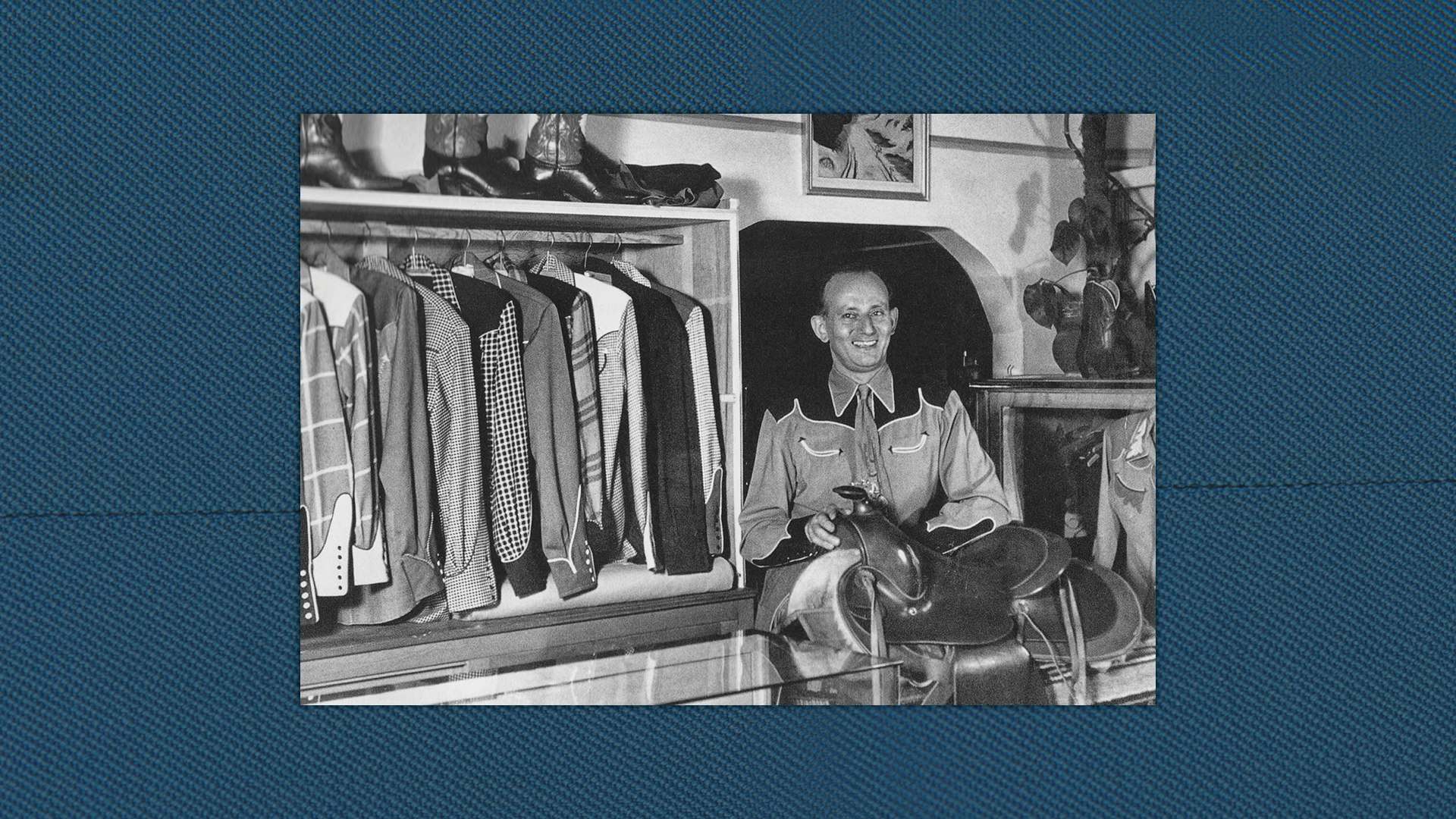
The Maddox Brothers & Rose could step onstage as a family and appear as a band before they played a note. The Country Music Hall of Fame’s Turk presentation shows five matching costume sets: repeated lines and details hold the group together, while the clothes leave each performer room to stand apart. That balance—one identity for the act, another for the person—is a useful way into Nathan Turk’s work.1
A shop on Ventura Boulevard
The Hall of Fame describes Turk as trained in Warsaw and places his early Los Angeles work in alterations. A 1945–46 Van Nuys city directory gives one precise business listing: “Turk Nathan,” under tailors, at 13711 Ventura Boulevard. In 1949, the Van Nuys News reported plans for a building at 13715 Ventura Boulevard to be used by N. Turk as a store and dwelling. The printed notices put his name in the same commercial corridor, but the different street numbers belong to their respective records.1, 2, 3
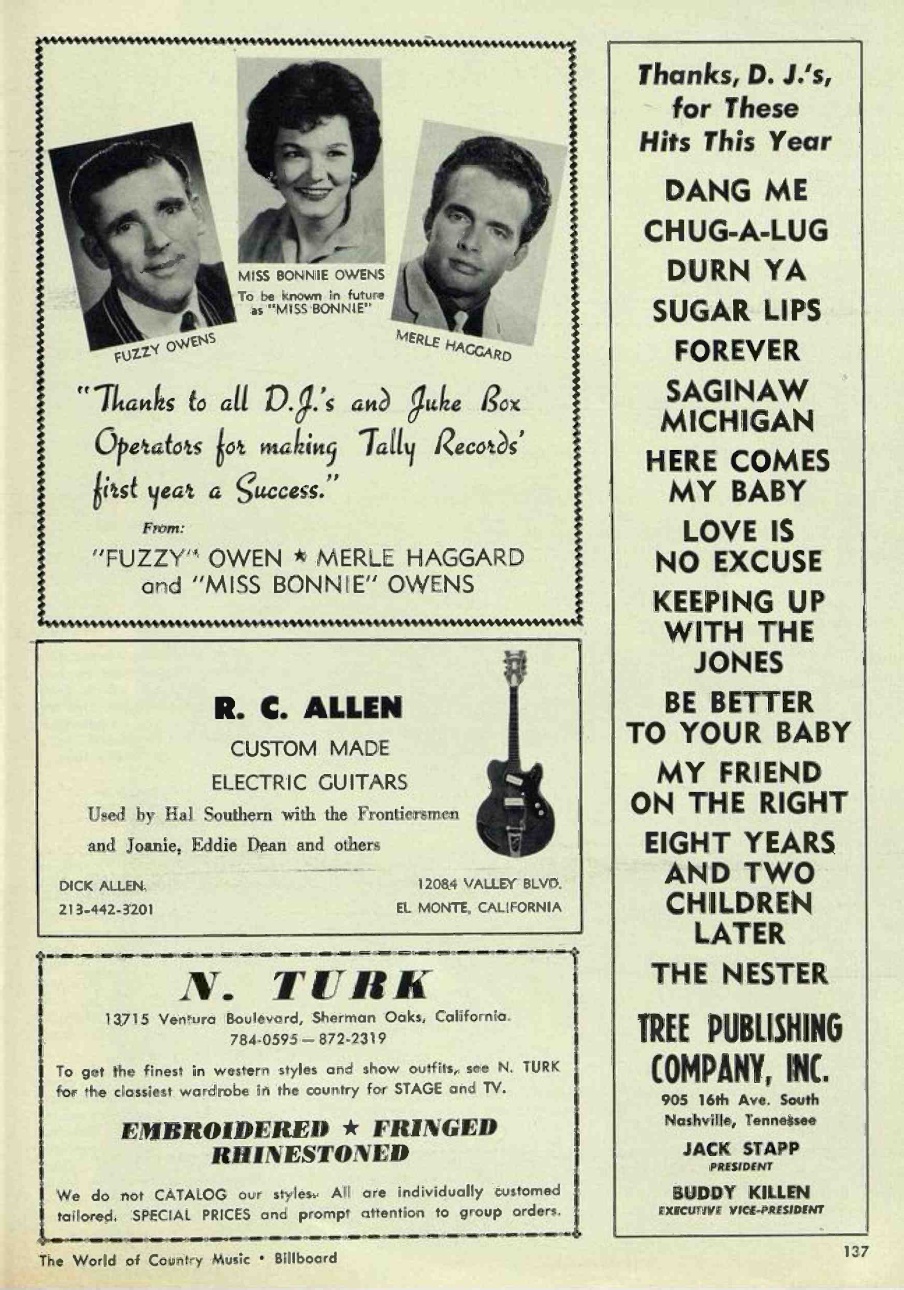
By 1954, an Abbott/Fabor Records advertisement called N. Turk the label’s “Tailor to Abbott and Fabor Stars,” giving 13715 Ventura Boulevard. In 1964, Turk’s own Billboard advertisement promoted clothing for stage and television and described embroidery, fringe, rhinestones and group orders. A separate Chicago History Museum account says the shop sold ready-made garments as well as custom pieces. Together, these sources show a business speaking to performers while also serving customers beyond one-off stage commissions.4, 5, 6
Film work brought another kind of customer to the shop. The Chicago History Museum says that after Gene Autry moved to Los Angeles in the mid-1930s, Autry asked Turk to create his movie wardrobe. The account places Turk’s tailoring in the western film world as well as the parade and music circuits.6
Five performers, one visual identity
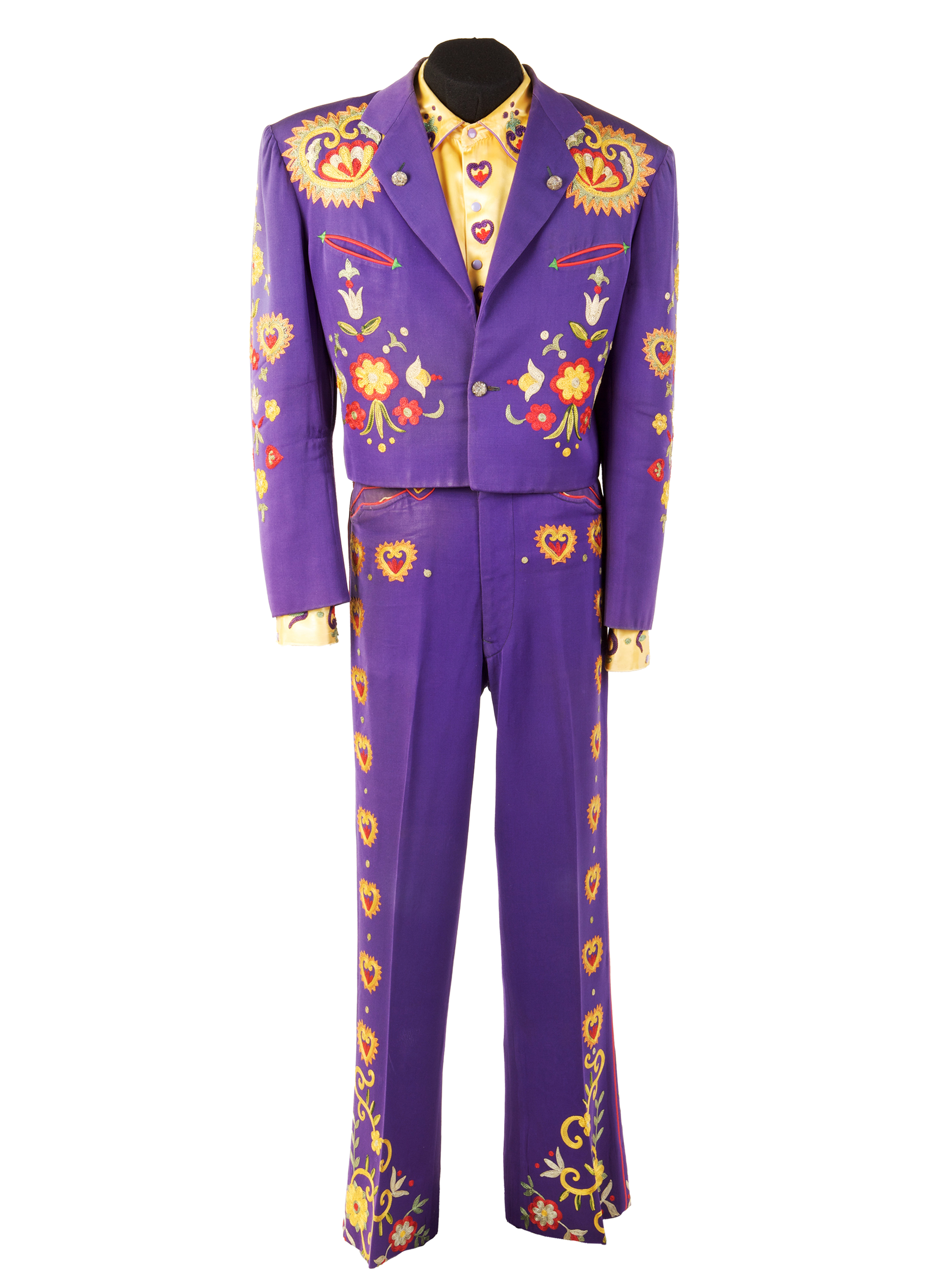
In the Maddox wardrobes, the connection between tailoring and performance becomes especially clear. The museum identifies garments combining satin and wool gabardine with coloured enamel snaps, piping, suede fringe, and chain-stitched flowers and vines. It also connects selected designs with Slavic folk-art influences. These are museum descriptions of the particular costumes on view, not a formula for every Turk garment.1
The group look depended on more than repeated decoration. A family band could be presented as a coordinated unit, while cut and embellishment marked the individual performers. In the photographs, Rose Maddox’s costume belongs to the same visual family as her brothers’ clothes without simply duplicating them. Turk’s work helped turn the group into a recognisable image for the stage.1
Bessie Turk’s contribution is visible in the finish. The Hall of Fame credits her with hand sewing on identified costumes, including arrowhead reinforcements at pocket and seam ends. Those small points of stitching do practical work as well as completing a design. Looking inside a garment changes the story from one tailor’s name to a household workshop in which cutting, decoration and finishing all mattered.1
A nickname becomes a drawing
Les “Carrot Top” Anderson supplies one unusually clear account of the wearer’s part in the process. After the musician acquired the nickname, he recalled staying up through the night to draw a little carrot-man figure, then taking the drawing to Turk. The Hall of Fame presents a detachable shirt bib from the resulting early-1950s stage costume: rhinestones, enamel snaps and a pistol-carrying, boot-wearing carrot figure. The story does not give us an order slip or a full design file. It does preserve a working exchange: a performer brought a private joke and a sketch; the workshop turned it into an image that could read across a room.1
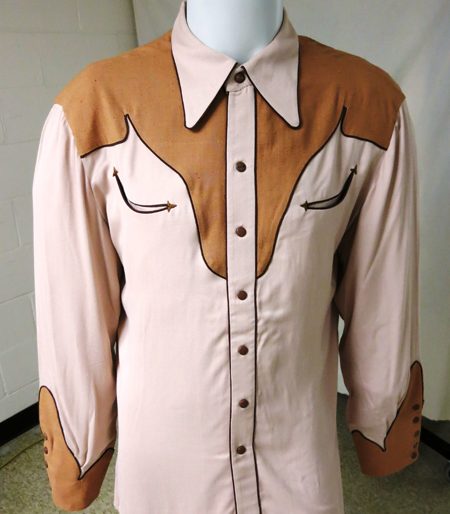
Turk’s surviving stage clothes repeat that exchange in other forms. A shirt made for Freddie “Careless” Love carries hearts and messenger doves; Johnny Horton’s has embroidered horse heads; Tex Ritter’s combines a two-tone body with piping, enamel snaps and smile pockets. Each description belongs to a particular museum-presented garment. Read together, they show costume as a language tailored to the person who wore it, not merely decoration added after the fact.1
From the bandstand to the album cover
Turk’s clothes also reached people beyond touring country acts. The Chicago History Museum identifies a Western shirt worn by Philip K. Wrigley around 1960 and describes the Ventura Boulevard shop’s mix of custom and ready-to-wear business. A museum-presented label reads “N. Turk / English Western Apparel / Van Nuys, California / Individually Styled.” It is a small piece of the shop’s own language, printed inside a garment.6, 1
In 1966, the Buckaroos’ Carnegie Hall album image made the ensemble principle easy to read. The Library of Congress identifies Buck Owens in a yellow Turk suit and the musicians around him in matching blue Turk suits. The lead singer stands apart in colour while the band remains visibly together. Here the clothes carried the act from stage to a record image that could circulate far beyond the hall.7
Other collections show different parts of the wardrobe. LACMA’s checklist includes a woman’s wool shirt and trousers dated around the 1950s; Texas Christian University records a later shirt and matching trousers with horned-frog imagery. They extend the surviving record from family-band outfits to women’s clothing and later regional identity, while each remains a separate object with its own museum description.8, 9
The look is made in the details
Turk’s clothes reward two scales of attention. From across a room, matching colour and silhouette make a band legible as a group. Close up, piping, snaps, fringe, embroidery and hand finishing reveal how the look was built. The archive gives us examples rather than a complete catalogue of the shop’s work, but those examples are enough to see why the tailor’s contribution mattered: the clothes made performance visible before a singer spoke or a band struck its first chord.1, 5, 7
Sources
- CMHOF, “Nathan Turk: Old World Meets New West”
- Los Angeles Public Library, Van Nuys City Directory 1945–1946
- Van Nuys News, 26 May 1949, p. 3 (displayed NewspaperArchive route)
- Billboard, 20 February 1954
- Billboard, 14 November 1964, The World of Country Music
- Chicago History Museum, “A CHM Western Wear Treasure”
- Library of Congress, “Carnegie Hall Concert with Buck Owens and His Buckaroos” essay
- LACMA, California Design checklist
- TCU Magazine, “Object lesson: Tailor made”